Ambaji Temple, popularly known as Shri Arasuri Ambaji Mata Temple, is one of the most sacred and powerful Shakti temples in India. Located in Ambaji town of Danta taluka, Banaskantha district, Gujarat, the temple is surrounded by the peaceful Aravalli hills, creating a calm and spiritual atmosphere for devotees.
Ambaji Temple holds a very special place in Hindu belief as it is counted among the 51 Shakti Peeths, where parts of Goddess Sati are believed to have fallen. Because of this divine importance, the temple attracts lakhs of devotees every year, especially followers of Maa Amba who visit to seek blessings, strength, and protection.
One of the most unique features of Ambaji Mata Temple is that there is no traditional idol inside the sanctum. Instead, devotees worship a sacred Shree Yantra, which represents the powerful presence of the Goddess. This rare tradition, along with the temple’s deep spiritual history and strong mythological connection, makes Ambaji Temple different from other temples in India.
Known for its pure spiritual energy, ancient beliefs, and peaceful surroundings, Ambaji Temple is not just a religious place but a life-changing spiritual experience. Whether you are visiting for faith, devotion, or inner peace, Shri Ambaji Mata Temple in Gujarat remains one of the most important pilgrimage destinations for Shakti worshippers across the country.
Ambaji Temple Darshan Timings
Knowing the Ambaji Temple darshan timings in advance helps you plan a smooth, peaceful, and well-organized visit. The temple follows a fixed darshan schedule every day, making it convenient for devotees to visit on weekdays, weekends, and festival days.
Ambaji Mata Temple remains open throughout the week, allowing devotees to choose a suitable time based on their travel plan and personal comfort.
| Darshan Slot | Timings |
|---|---|
| Morning Darshan | 07:00 AM to 11:30 AM |
| Afternoon Darshan | 12:30 PM to 04:30 PM |
| Evening Darshan | 06:30 PM to 09:00 PM |
| Days Open | Monday to Sunday |
Morning darshan is ideal for devotees who prefer a calm and fresh temple atmosphere. Afternoon darshan suits pilgrims arriving later in the day, while evening darshan offers a peaceful spiritual experience with temple lights and ongoing prayers.
It is recommended to reach the temple at least 30 minutes early, especially during weekends, festivals, and Navratri, as Ambaji Temple receives a large number of devotees during these periods.
Ambaji Temple Opening and Closing Time
Ambaji Temple opens early in the morning and remains open till night, allowing devotees enough time to visit comfortably. The temple follows a fixed daily schedule, making it easy for pilgrims to plan their darshan without any confusion.
Ambaji Temple opening time is 07:00 AM, and the temple closes at 09:00 PM every day. During this time, devotees can peacefully offer prayers and experience the divine presence of Maa Ambaji.
There is no entry fee for darshan at Ambaji Temple. All devotees, regardless of age or background, can have darshan free of cost, which makes Ambaji Mandir one of the most welcoming Shakti Peeths in India.
Ambaji Aarti Timings
Aarti at Ambaji Temple is a deeply spiritual experience and an important part of the daily worship. Devotees gather during aarti time to witness the sacred rituals and chant prayers dedicated to Maa Ambaji, creating an atmosphere filled with devotion and positive energy.
Ambaji Temple follows fixed aarti timings on regular days. However, during festivals and special religious occasions, minor changes or additional aartis may be arranged by the temple trust.
| Aarti Type | Timings |
|---|---|
| Morning Aarti | 06:00 AM |
| Evening Aarti | 06:00 PM |
| Days Performed | Daily |
The morning aarti marks a peaceful beginning to the day, while the evening aarti offers a calm and divine experience as lamps are lit and devotional hymns echo through the temple.
During Navratri, Purnima, and other major festivals, special aartis, extended darshan hours, and additional rituals are often introduced to accommodate the large number of devotees.
Ambaji Temple Timings During Navratri
Navratri is the most important and grand festival celebrated at Ambaji Temple. During these nine holy days, lakhs of devotees from across India visit the temple to seek blessings from Maa Ambaji. The entire town becomes spiritually vibrant with prayers, bhajans, garba, and special rituals.
During Navratri, the Ambaji Temple timings are usually extended to manage the heavy rush of pilgrims. The temple trust also arranges special darshan slots, additional aartis, and festival-specific पूजा rituals for devotees. These updated schedules are generally announced a few days before Navratri begins.
Devotees planning a Navratri visit are strongly advised to:
- Check the latest Ambaji Temple Navratri timings before travel
- Reach the temple early morning or late night to avoid long queues
- Follow crowd management rules issued by the temple authorities
Visiting Ambaji Temple during Navratri is considered highly auspicious and spiritually rewarding, but proper planning helps ensure a peaceful darshan.
Ambaji Bhojanalaya Timings and Food Details
To provide clean, affordable, and wholesome food to pilgrims, the Ambaji Mata Devasthan Trust operates Shree Ambika Bhojanalaya. This dining facility serves devotees visiting Ambaji Temple throughout the year and ensures a safe and hygienic meal experience.
The Bhojanalaya follows a fixed daily schedule, making it convenient for families, elderly devotees, and group travelers.
| Service | Timings / Charges |
|---|---|
| Opening Hours | 10:00 AM to 10:00 PM |
| Full Meal | ₹165 |
| Children Meal (up to 10 years) | ₹115 |
| Full Meal with Sweet | ₹215 |
| Children Meal with Sweet (up to 10 years) | ₹165 |
The meals are simple, filling, and prepared according to traditional guidelines. The Bhojanalaya is located close to the temple premises, making it easy for devotees to eat without traveling far.
During Navratri and other peak pilgrimage seasons, the Bhojanalaya is especially helpful as hotels and restaurants may be crowded. For a safe, budget-friendly, and trust-run food option near Ambaji Temple, Shree Ambika Bhojanalaya remains one of the top choices for pilgrims.
Spiritual Significance of Ambaji Temple
Ambaji Temple is believed to be the sacred source of Adi Shakti, the supreme cosmic power of the universe. According to ancient Hindu beliefs and scriptures, this holy place is where the heart of Goddess Sati fell, which is why Ambaji is worshipped as one of the most powerful Shakti Peeths in India.
Devotees strongly believe that praying at Ambaji Temple helps remove life obstacles, fulfills heartfelt wishes, and brings inner strength, peace, and positive energy. Many pilgrims visit the temple seeking protection, courage, and blessings from Maa Ambaji, especially during difficult phases of life.
The spiritual importance of Ambaji increases even more during Navratri, when lakhs of devotees arrive from different parts of the country. During this time, the temple atmosphere becomes deeply devotional, filled with prayers, chants, and faith in the divine mother.
Ambaji Temple Architecture and Layout
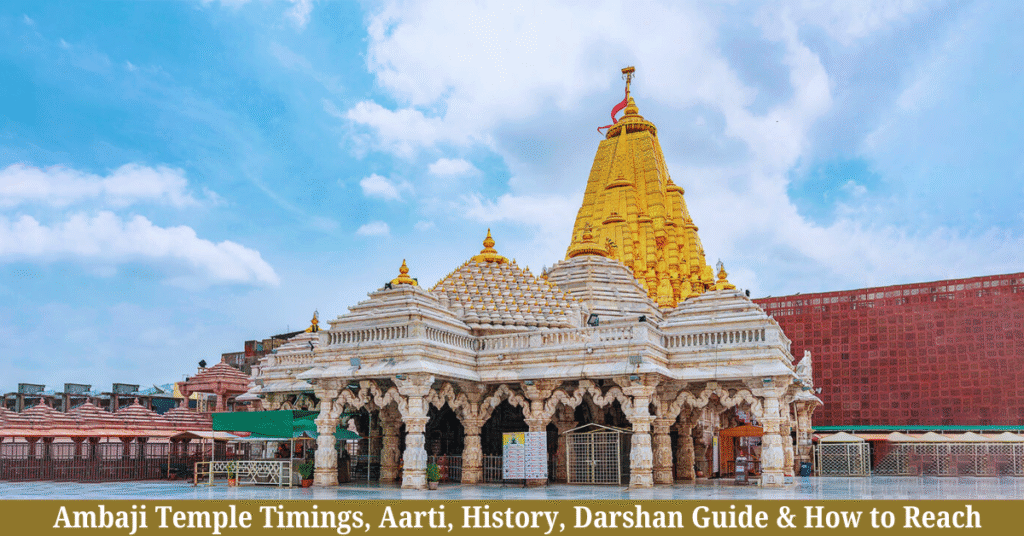
The Ambaji Temple complex is thoughtfully designed and reflects traditional Indian art and spiritual planning. The newly constructed Nij Mandir stands out with its beautiful marble work, fine carvings, and peaceful surroundings.
Important sections of the temple complex include a spacious Mandap where devotees gather for prayers, the Garbhgruh that houses the sacred Gokh, and the wide Chachar Chowk, which is finished with elegant marble flooring. The Chachar Chowk is considered the spiritual center of the temple, as most rituals, ceremonies, and special prayers are performed here.
Near the temple, there is also a well-organized Yagnashala, where sacred fire rituals and religious events are conducted during festivals and special occasions.
At the very top of Ambaji Temple shines a grand golden Kalash, placed at a height of 103 feet. This massive Kalash weighs more than three tonnes and is carved from a single marble stone brought from Arasur Hill. It is fully gold-plated and attached to a long sacred flag and Trishul, symbolizing divine power, protection, and blessings over the temple and its devotees.
A Temple Without an Idol
One of the most unique and sacred features of Ambaji Temple is that there is no physical idol of Goddess Amba inside the main sanctum. Instead of an idol, devotees worship a powerful sacred symbol known as the Shree Yantra, also called the Shakti Visa Yantra.
Inside the sanctum is a small cave-like sacred space known as the Gokh. Within this Gokh rests a gold-plated Shree Yantra with 51 Bijpatras, which represent the 51 Shakti Peeths of Hindu tradition. This Yantra is the main focus of worship and devotion.
The Shree Yantra is visible to devotees during darshan, but it has never been photographed, maintaining its spiritual purity, mystery, and divine respect. This rare tradition makes Ambaji Temple truly different from other Shakti temples.
Ambaji Ropeway Service at Gabbar Hill
For devotees who find it difficult to climb the 999 steps of Gabbar Hill, Ambaji offers a convenient ropeway service. Popularly called Udan Khatola, this ropeway was started in 1998 to help elderly devotees, children, and those with health issues reach the sacred hilltop safely and comfortably.
The Ambaji ropeway takes visitors directly to the top of Gabbar Hill in just a few minutes. During the ride, devotees can enjoy beautiful views of the Aravalli hills, green forests, and the peaceful surroundings, making the journey both spiritual and enjoyable.
The ropeway is well maintained and operated under strict safety measures, making it one of the most preferred ways to reach Gabbar Hill during peak seasons like Navratri and full moon days.
Festivals Celebrated at Ambaji Temple
Ambaji Temple celebrates many religious festivals throughout the year, filling the town with devotion, faith, and cultural energy. Each festival has its own importance and attracts a large number of pilgrims.
Major festivals celebrated at Ambaji Temple include
- Aswin Sud Navratri
- Chaitra Navratri
- Bhadrapad Poonam Mela
- Posh Sud Poonam
- Kartik Sud
- Shravan Vad Amas
Among all these, Navratri is the most grand and spiritually powerful festival at Ambaji. During this time, devotees from Gujarat, Rajasthan, Madhya Pradesh, and other parts of India visit the temple in huge numbers to seek blessings from Maa Ambaji.
The entire town comes alive with prayers, garba, bhajans, and special temple rituals, creating a deeply devotional atmosphere.
Places to Visit Near Ambaji Temple
A visit to Ambaji is not just about temple darshan. The area around the temple offers several spiritual, scenic, and peaceful places that devotees can explore along with their pilgrimage.
Popular places to visit near Ambaji include
- Kailash Hill Sunset Point, known for scenic evening views
- Mangalya Van, a calm and green nature park
- Kamakshi Mandir, another sacred Shakti temple
- Mansarovar, a peaceful water body for relaxation
- Koteshwar, an ancient Shiva temple
- Marble Mines, famous for white marble formations
- Kumbharia Dera, a group of historic Jain temples
- Someshwar, a quiet spiritual spot
- Kumbhleshwar Mahadev Temple
- Siteseen, a serene location surrounded by nature
Exploring these nearby places adds more value to your Ambaji Temple visit and makes the trip spiritually enriching as well as refreshing.
Accommodation Options in Ambaji
Ambaji provides a wide range of stay options for pilgrims and travelers, making it easy for devotees to find comfortable accommodation according to their budget. Whether you are visiting for a short darshan or staying during Navratri, Ambaji has clean, safe, and affordable places to stay.
Most accommodations are located close to Ambaji Temple, which helps devotees save travel time and focus on their spiritual journey. Pilgrims can choose from dharamshalas, ashrams, and budget hotels, all offering basic facilities at reasonable prices.
Many of these stays are managed by temple trusts or local organizations, ensuring a peaceful and devotional environment suitable for families, senior citizens, and group travelers.
Popular accommodation options in Ambaji include
- Parvati Pranam Dharamshala, known for clean rooms and a calm atmosphere
- Ambaji Shakti Pathikashram, a trusted stay option for pilgrims
- Nandni Ashram, ideal for budget travelers and families
- Sitaba Sadan, offering simple and comfortable lodging
- Shree Ganesh Bhavan, a convenient stay close to the temple
During Navratri, Purnima, and festival seasons, rooms tend to fill up quickly. It is highly recommended to book accommodation in advance to avoid last-minute issues.
Choosing the right place to stay in Ambaji ensures a comfortable, peaceful, and stress-free temple visit, allowing devotees to fully focus on prayers and spiritual experiences.
How to Reach Ambaji Temple
Ambaji Temple is well connected by road, rail, and air, making it easy for devotees from different parts of India to plan their journey without difficulty. Whether you are traveling from Gujarat, Rajasthan, or other nearby states, reaching Ambaji is simple and convenient.
Reaching Ambaji Temple by Air
The nearest airport to Ambaji Temple is Sardar Vallabhbhai Patel International Airport in Ahmedabad, which is located around 175 kilometers away. From the airport, devotees can hire taxis, use private cabs, or travel by bus to reach Ambaji. The road journey from Ahmedabad to Ambaji is smooth and comfortable.
Reaching Ambaji Temple by Train
The closest railway station to Ambaji is Abu Road Railway Station, situated approximately 21 kilometers from the temple. Abu Road is well connected to major cities like Delhi, Mumbai, Jaipur, and Ahmedabad. From the station, regular taxis, autos, and buses are available to reach Ambaji Temple easily.
Reaching Ambaji Temple by Road
Ambaji has a well-developed bus station located just 1 kilometer from the temple. State transport and private buses operate frequently from major cities of Gujarat and Rajasthan, making road travel one of the most preferred options for pilgrims.
Many devotees also choose to travel by private car, as the roads leading to Ambaji are in good condition and offer scenic views of the Aravalli hills.
Distance of Ambaji Temple from Major Cities
City
Ahmedabad – 184 km
Vadodara – 284 km
Rajkot – 373 km
Dwarka – 603 km
These distances help pilgrims plan travel time and choose the best route for a smooth and comfortable journey to Ambaji Temple.
Planning your travel in advance and choosing the right mode of transport ensures a stress-free and peaceful visit to Ambaji Temple, allowing devotees to focus fully on darshan and spiritual experiences.
Ambaji Temple Address and Contact Details
Ambaji Temple is located in Ambaji town of Danta taluka, in the Banaskantha district of Gujarat. Surrounded by the peaceful Aravalli hills, the temple is easily reachable from major cities of Gujarat and nearby Rajasthan, making it a popular pilgrimage destination throughout the year.
The temple is situated about 65 kilometers from Palanpur, 45 kilometers from Mount Abu, and nearly 185 kilometers from Ahmedabad. Its location near Mount Abu also makes Ambaji a preferred stop for devotees visiting both spiritual destinations in one trip.
Having the correct address and contact details helps devotees plan their visit, make inquiries about darshan timings, festivals, accommodation, and special arrangements during Navratri.
Ambaji Temple Contact Information
Devotees can use these contact details to get authentic and updated information directly from the Ambaji Temple Trust regarding darshan timings, Navratri arrangements, accommodation facilities, bhojanalaya services, and special poojas.
| Contact Type | Details |
|---|---|
| Temple Address | Ambaji, Taluka Danta, District Banaskantha, Gujarat – 385110 |
| Administrator Phone | 02749-262236 |
| Contact Office Phone | 02749-262930 |
| Fax Numbers | 02749-264536, 02749-262931 |
| Official Email | ambajitempletrust@gmail.com |
Ambaji Temple FAQs
Q1. Where is Ambaji Temple located?
Ambaji Temple is in Ambaji town, Danta taluka, Banaskantha district, Gujarat, near the Aravalli hills.
Q2. What is special about Ambaji Temple?
It is one of the 51 Shakti Peeths and houses a sacred Shree Yantra instead of a traditional idol of Maa Ambaji.
Q3. What are the Ambaji Temple darshan timings?
Morning: 07:00–11:30 AM, Afternoon: 12:30–04:30 PM, Evening: 06:30–09:00 PM, open all seven days.
Q4. When is aarti performed at Ambaji Temple?
Morning aarti at 06:00 AM and evening aarti at 06:00 PM daily; special aartis occur during festivals.
Q5. Is there a fee for Ambaji Temple darshan?
No, darshan at Ambaji Temple is free for all devotees.
Q6. What are the Ambaji Bhojanalaya timings and meal charges?
Open daily from 10:00 AM to 10:00 PM. Full meal ₹165, children ₹115, full meal with sweet ₹215.
Q7. How can I reach Ambaji Temple?
By air: Ahmedabad Airport (175 km), by train: Abu Road Station (21 km), by road: direct buses from nearby cities.
Q8. What is Gabbar Tirth and how to reach it?
Gabbar Tirth is a sacred hill near Ambaji Temple; 999 steps lead to the top or you can use the ropeway.
Q9. What festivals are celebrated at Ambaji Temple?
Major festivals include Navratri, Purnima, Aswin Sud Poonam, Chaitra Navratri, and Bhadrapad Poonam Mela.
Q10. Are there accommodations near Ambaji Temple?
Yes, dharamshalas and budget hotels like Parvati Pranam Dharamshala, Ambaji Shakti Pathikashram, and Nandni Ashram are available.
Q11. How can I contact Ambaji Temple Trust?
Email: ambajitempletrust@gmail.com, Phone: 02749-262236 (Administrator), 02749-262930 (Office).