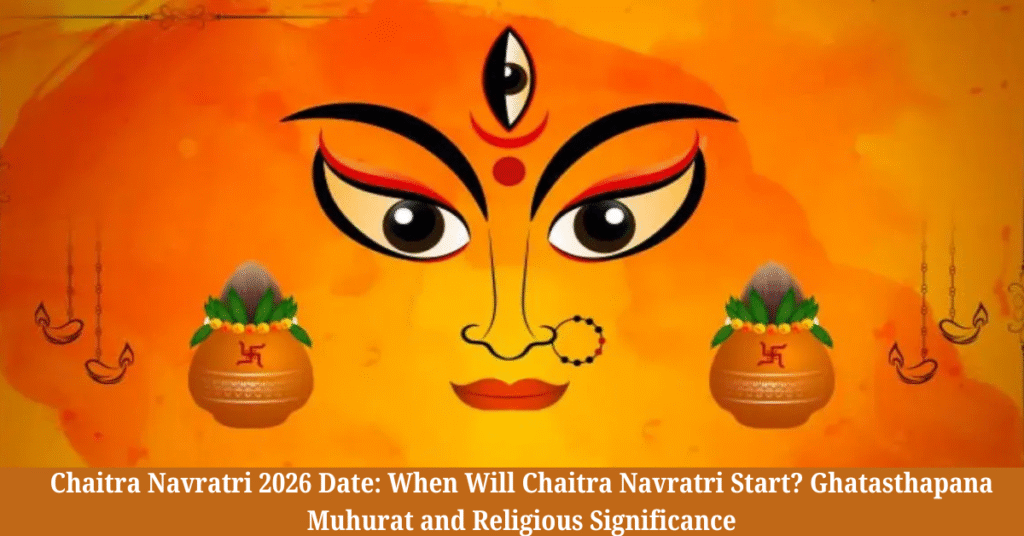
Chaitra Navratri 2026 is one of the most important Hindu festivals and marks the spiritual start of the Hindu New Year. This sacred nine-day festival is devoted to Goddess Durga and her nine powerful forms, known as Navdurga. It is observed in the month of Chaitra, as per the Hindu lunar calendar, and also welcomes the arrival of spring, symbolising renewal, hope, and positive energy.
During this period, devotees across India worship Maa Durga with full faith through fasting, prayers, and temple visits. Chaitra Navratri is believed to remove negativity, bring inner strength, and open the path to spiritual growth.
Many people actively search online for important details such as:
- Chaitra Navratri 2026 dates
- When will Chaitra Navratri start in 2026
- Ghatasthapana Muhurat 2026
- Religious and spiritual importance of Chaitra Navratri
To help devotees plan their rituals without confusion, this complete Chaitra Navratri 2026 guide explains all essential information in simple, easy-to-understand language. Whether you are observing Navratri for the first time or following age-old traditions, this guide is designed to give you clear, accurate, and devotional details in one place.
Chaitra Navratri 2026 Start and End Date
In 2026, Chaitra Navratri will begin on Thursday, 19 March 2026, and will conclude on Friday, 27 March 2026.
The festival starts on the Pratipada Tithi of Shukla Paksha in the Chaitra month. The ninth and final day is celebrated as Ram Navami, the birth anniversary of Lord Shri Rama. Because of this, Chaitra Navratri is also known as Rama Navratri or Vasanta Navratri.
Ghatasthapana Muhurat for Chaitra Navratri 2026
Ghatasthapana, also called Kalash Sthapana, is the most important ritual of Chaitra Navratri. It marks the formal beginning of Navratri worship and symbolises the invocation of Goddess Durga.
Ghatasthapana should always be performed after sunrise during Pratipada Tithi for maximum spiritual benefits.
| Ritual | Date | Auspicious Time |
|---|---|---|
| Ghatasthapana Date | 19 March 2026 (Thursday) | Morning after sunrise |
| Pratipada Tithi Begins | 18 March 2026 | Evening |
| Pratipada Tithi Ends | 19 March 2026 | Night |
Correct timing of Ghatasthapana is believed to bring prosperity, peace, and divine protection into the home.
Religious Importance of Chaitra Navratri
Chaitra Navratri holds deep spiritual meaning in Hindu tradition. It represents the victory of good over evil and the awakening of divine feminine energy, known as Shakti.
This period is considered highly auspicious for:
- New beginnings and spiritual practices
- Fasting and self-discipline
- Worship of Goddess Durga
- Removing negativity and obstacles
Spiritually, Chaitra Navratri is believed to cleanse the mind and body, making it an ideal time to start a disciplined and positive lifestyle.
Nine Days of Chaitra Navratri 2026: Goddess, Tithi, and Colour
Chaitra Navratri 2026 will be observed from 19 March to 27 March. These nine sacred days are dedicated to the nine forms of Maa Durga, with each day linked to a specific Goddess, Tithi, and auspicious colour. Devotees often wear the colour of the day to attract divine blessings and positive energy.
Day 1 – 19 March (Pratipada)
- Goddess: Maa Shailputri
- Navratri Colour: Yellow
- Significance:
- Symbol of strength and purity
- Represents new beginnings and positivity
- Ideal day to start Navratri fasting and prayers
Day 2 – 20 March (Dwitiya)
- Goddess: Maa Brahmacharini
- Navratri Colour: Green
- Significance:
- Goddess of devotion and penance
- Green reflects growth, wisdom, and inner peace
- Encourages discipline and spiritual focus
Day 3 – 21 March (Tritiya)
- Goddess: Maa Chandraghanta
- Navratri Colour: Grey
- Significance:
- Symbol of courage and bravery
- Grey represents balance and stability
- Protects devotees from fear and negativity
Day 4 – 22 March (Chaturthi)
- Goddess: Maa Kushmanda
- Navratri Colour: Orange
- Significance:
- Creator of the universe
- Orange reflects energy, enthusiasm, and vitality
- Brings health, confidence, and success
Day 5 – 23 March (Panchami)
- Goddess: Maa Skandamata
- Navratri Colour: White
- Significance:
- Goddess of motherhood and nurturing
- White symbolizes peace, purity, and calmness
- Blesses devotees with wisdom and harmony
Day 6 – 24 March (Shashthi)
- Goddess: Maa Katyayani
- Navratri Colour: Red
- Significance:
- Fierce form of Durga
- Red represents power, courage, and protection
- Worshipped for strength and victory over obstacles
Day 7 – 25 March (Saptami)
- Goddess: Maa Kalaratri
- Navratri Colour: Royal Blue
- Significance:
- Destroyer of evil and negative forces
- Royal Blue symbolizes depth and divine power
- Removes fear and grants inner strength
Day 8 – 26 March (Ashtami)
- Goddess: Maa Mahagauri
- Navratri Colour: Pink
- Significance:
- Goddess of purity and compassion
- Pink represents love, kindness, and peace
- Very auspicious for prayers and Kanya Puja
Day 9 – 27 March (Navami)
- Goddess: Maa Siddhidatri
- Navratri Colour: Purple
- Significance:
- Bestower of spiritual wisdom and siddhis
- Purple symbolizes spirituality and fulfillment
- Marks completion of Navratri worship
Why Wearing Navratri Colours Is Important
- Helps devotees spiritually connect with Maa Durga
- Enhances positivity and devotion
- Follows traditional Hindu beliefs linked to each Goddess
- Popular search trend during Navratri
Chaitra Navratri 2026 Rituals and Traditions
Ghatasthapana and Akhand Jyoti
The festival begins with Kalash Sthapana and the lighting of an Akhand Jyoti, which burns continuously for nine days. Barley seeds are sown near the Kalash, symbolising growth, prosperity, and abundance.
Fasting and Vrat
Devotees observe fasts for spiritual purification. Some follow nirjala vrat, while others consume fruits, milk, and vrat food. Fasting during Chaitra Navratri is believed to bring mental clarity and inner strength.
Daily Devi Puja
Each day includes worship of the respective form of Goddess Durga with flowers, incense, lamps, and mantra chanting. Reciting Durga Saptashati is considered highly auspicious.
Ram Navami Celebration
The ninth day is celebrated as Ram Navami. Temples organise special pujas, bhajans, and kirtans in honour of Lord Rama.
Importance of Navratri Colours in Chaitra Navratri 2026
Each Navratri colour carries a specific spiritual vibration:
- Yellow represents happiness and optimism
- Green symbolises harmony and growth
- Grey promotes balance and calmness
- Orange reflects enthusiasm and strength
- White signifies peace and purity
- Red shows power and courage
- Royal Blue represents divine wisdom
- Pink spreads love and compassion
- Purple enhances spirituality
Wearing the daily colour is believed to strengthen the spiritual connection with the Goddess.
Regional Observance of Chaitra Navratri Across India
Chaitra Navratri is not only a spiritual festival but also a reflection of India’s rich cultural diversity. While the core devotion to Maa Durga remains the same, the way Chaitra Navratri is observed changes from region to region. These regional traditions add deeper meaning and attract devotees from different parts of the country.
Chaitra Navratri in North India
- Devotees observe fasting and visit Durga temples daily
- Jagrans, satsangs, bhajans, and kirtans are organised in homes and temples
- Many people perform Ghatasthapana on the first day and follow strict Navratri rituals
- The focus remains on prayer, devotion, and spiritual discipline
Chaitra Navratri in Maharashtra
- The festival coincides with Gudi Padwa, which marks the Marathi New Year
- Homes are decorated, and the Gudi flag is raised as a symbol of victory and prosperity
- Special traditional dishes are prepared, and prayers are offered to the Goddess
- It is a blend of Navratri devotion and New Year celebrations
Chaitra Navratri in Andhra Pradesh and Telangana
- Chaitra Navratri aligns with Ugadi, the Telugu New Year
- Devotees begin the year by seeking blessings of Maa Durga for health and success
- Ugadi Pachadi is prepared, symbolising different experiences of life
- Temples witness special prayers and cultural programs during this time
Spiritual Meaning of Regional Celebrations
- Shows unity in devotion despite regional differences
- Connects Navratri with New Year traditions in many states
- Encourages families to start the year with positivity and faith
This regional way of celebrating Chaitra Navratri highlights how the festival brings together spirituality, culture, and tradition across India, making it one of the most meaningful Hindu festivals of the year.
Final Thoughts
Chaitra Navratri 2026 is a powerful spiritual period that offers a fresh start filled with devotion, discipline, and divine blessings. Observing Ghatasthapana at the correct muhurat, worshipping Maa Durga in her nine forms, and following Navratri rituals with faith can bring peace, prosperity, and positive transformation.
May this Chaitra Navratri bring strength, clarity, and divine grace into your life.
Chaitra Navratri 2026 FAQs
When will Chaitra Navratri 2026 start?
Chaitra Navratri 2026 will start on Thursday, 19 March 2026.
When will Chaitra Navratri 2026 end?
Chaitra Navratri will end on Friday, 27 March 2026, with Ram Navami on the final day.
What is the Ghatasthapana date for Chaitra Navratri 2026?
Ghatasthapana will be performed on 19 March 2026, after sunrise.
What is the best time for Ghatasthapana in 2026?
The best time for Ghatasthapana is morning hours after sunrise during Pratipada Tithi.
Why is Chaitra Navratri important in Hinduism?
Chaitra Navratri marks the Hindu New Year and celebrates the power of Goddess Durga and divine feminine energy.
How many days is Chaitra Navratri celebrated?
Chaitra Navratri is celebrated for nine days.
Which day is Ram Navami in Chaitra Navratri 2026?
Ram Navami falls on 27 March 2026, the ninth day of Chaitra Navratri.
What are the nine goddesses worshipped during Chaitra Navratri?
The nine goddesses are Shailputri, Brahmacharini, Chandraghanta, Kushmanda, Skandamata, Katyayani, Kalaratri, Mahagauri, and Siddhidatri.
What is Chaitra Navratri also called?
Chaitra Navratri is also known as Vasanta Navratri and Rama Navratri.
Is fasting necessary during Chaitra Navratri?
Fasting is optional but widely observed for spiritual cleansing and devotion.
What foods are allowed during Chaitra Navratri fast?
Devotees usually eat fruits, milk, and vrat food while avoiding grains.
What is the significance of Navratri colours?
Navratri colours represent divine energy, positivity, and spiritual balance for each day.
Is Chaitra Navratri celebrated all over India?
Yes, Chaitra Navratri is celebrated across India, along with Gudi Padwa and Ugadi in different regions.
Can new work be started during Chaitra Navratri?
Yes, Chaitra Navratri is considered auspicious for new beginnings.
What is the spiritual benefit of Chaitra Navratri?
Chaitra Navratri helps in removing negativity, gaining inner strength, and spiritual growth.