Aundha Nagnath Jyotirlinga Temple is one of the oldest and most spiritually powerful temples dedicated to Lord Shiva in India. Situated in the Hingoli district of Maharashtra, this sacred shrine holds a special place among the twelve Jyotirlingas of Lord Shiva, making it an important pilgrimage site for devotees from across the country.
What makes Aundha Nagnath Temple truly unique is its rare west-facing Jyotirlinga, a feature found in very few Shiva temples. The temple is also admired for its ancient legends, deep spiritual energy, and remarkable stone-carved architecture, reflecting the rich cultural heritage of the region.
According to religious beliefs, visiting Aundha Nagnath Jyotirlinga helps devotees attain spiritual peace, relief from negative energies, and blessings of Lord Shiva. The temple is closely associated with powerful mythological stories and has remained a center of devotion for centuries.
This guide covers everything you need to know about Aundha Nagnath Jyotirlinga Temple, from temple timings and rituals to history, festivals, architecture, and travel tips, making it easy for devotees and visitors to plan their visit.
Whether you are a Shiva devotee, spiritual seeker, or history enthusiast, this guide will help you plan a meaningful visit to one of India’s most revered Jyotirlinga temples.
About Aundha Nagnath Jyotirlinga Temple
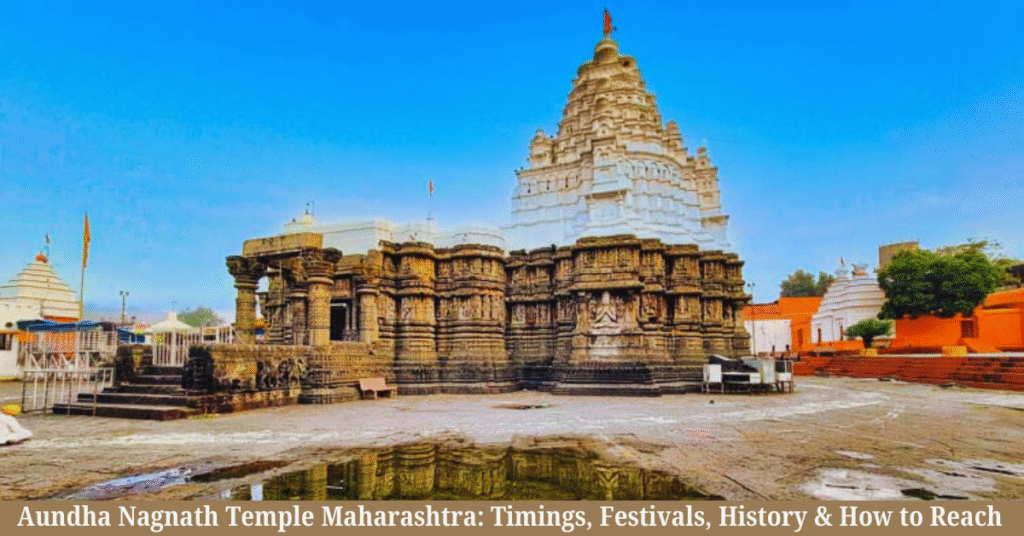
Aundha Nagnath Temple is not only a major Jyotirlinga shrine but also an architectural marvel of Maharashtra. Spanning a vast campus of approximately 60,000 square feet, the temple commands attention with its towering 60-foot structure and intricately carved interiors. The main sanctum covers around 7,200 square feet, reflecting both grandeur and spiritual significance.
The temple’s Hemadpanti architectural style is a highlight for visitors and historians alike. This ancient construction technique, widely used in Maharashtra, involves precision-cut stone structures without the use of mortar, creating massive pillars, finely detailed carvings, and a timeless design that has endured for centuries. The combination of spiritual sanctity and architectural brilliance makes Aundha Nagnath a must-visit destination for devotees and heritage enthusiasts alike.
Important Facts About Aundha Nagnath Jyotirlinga
- One of the 12 Jyotirlingas of Lord Shiva: Aundha Nagnath holds a sacred place among India’s most revered Shiva temples.
- Location: Situated in Hingoli district, Maharashtra, making it easily accessible for pilgrims and tourists.
- West-Facing Jyotirlinga: Unlike most Shiva temples, the Jyotirlinga faces west, a rare feature with deep spiritual significance.
- Historical Associations: Linked with the Pandavas and later restored by Rani Ahilyabai Holkar, highlighting its mythological and historical importance.
- Spiritual Beliefs: Devotees believe that worshipping here provides protection from poisons and negative energies, while promoting courage and inner strength.
- Architectural Excellence: Famous for Hemadpanti stone construction, detailed carvings, and massive pillars that showcase the temple’s enduring legacy.
Visiting Aundha Nagnath Jyotirlinga Temple offers devotees not only an opportunity for spiritual growth but also a chance to witness ancient Indian craftsmanship and heritage. Its combination of religious importance, historical legacy, and architectural brilliance makes it a unique and revered destination in Maharashtra.
Aundha Nagnath Temple Darshan Timings 2026
Aundha Nagnath Jyotirlinga Temple remains open for devotees for most of the day, allowing ample time for peaceful darshan and worship. The temple follows an extended schedule, especially during Shravan Maas and other auspicious occasions, to accommodate the large number of pilgrims.
Devotees believe that early morning darshan and abhishek offer the most peaceful and spiritually uplifting experience.
Aundha Nagnath Temple Daily Darshan Timings
| Ritual | Timings |
|---|---|
| General Darshan | 4:00 AM to 9:00 PM |
| Darshan During Shravan Maas | 4:00 AM to 10:00 PM |
| Afternoon Pooja | 1:00 PM to 1:30 PM |
| Evening Pooja | 4:30 PM to 5:30 PM |
Aundha Nagnath Temple Timings During Shravan Month
The holy month of Shravan is considered extremely auspicious for Lord Shiva devotees. During this period, Aundha Nagnath Temple witnesses heavy footfall, especially on Mondays (Shravan Somvar). To manage crowds and allow uninterrupted worship, the temple remains open for longer hours.
Shravan Month Darshan Timings (Day-Wise)
| Day | Morning Timings | Evening Timings |
|---|---|---|
| Monday | 2:00 AM | 10:00 PM |
| Tuesday | 5:00 AM to 4:00 PM | 5:00 PM to 9:00 PM |
| Wednesday | 5:00 AM to 4:00 PM | 5:00 PM to 9:00 PM |
| Thursday | 5:00 AM to 4:00 PM | 5:00 PM to 9:00 PM |
| Friday | 5:00 AM to 4:00 PM | 5:00 PM to 9:00 PM |
| Saturday | 5:00 AM to 4:00 PM | 5:00 PM to 9:00 PM |
| Sunday | 5:00 AM to 4:00 PM | 5:00 PM to 9:00 PM |
Monday mornings in Shravan are considered highly sacred, and devotees often begin lining up well before dawn.
Aundha Nagnath Temple Aarti and Puja Timings
The temple follows traditional Shaivite rituals, and multiple pujas and aartis are performed daily with great devotion. These sacred ceremonies allow devotees to experience the divine presence of Lord Shiva in a deeply spiritual atmosphere.
Daily Puja and Aarti Schedule
| Puja Type | Timings |
|---|---|
| Rudrabhishek Puja | 4:05 AM |
| Aarti Puja | 12:00 PM |
| Sreesan Puja | 4:00 PM |
| Sayarakchai Puja | 8:30 PM |
| Shejaarti Puja | 11:00 PM |
Best Time for Darshan at Aundha Nagnath Temple
The early morning hours, especially during Rudrabhishek, are considered the best time for darshan. Visiting during this time allows devotees to perform abhishek peacefully and avoid large crowds.
For those planning a visit during Shravan Maas, arriving early and following temple guidelines ensures a smooth and spiritually fulfilling experience.
Festivals Celebrated at Aundha Nagnath Jyotirlinga Temple
Aundha Nagnath Temple, one of Maharashtra’s most sacred Jyotirlingas, comes alive during major Hindu festivals, attracting thousands of devotees from across the country. The temple’s festive celebrations combine devotion, tradition, and spiritual energy, making every visit a deeply enriching experience.
Mahashivratri – The Night of Lord Shiva
Mahashivratri is the most important festival at Aundha Nagnath Temple. Devotees celebrate with night-long worship, special Rudrabhishek ceremonies, and devotional bhajans. A unique highlight of the festival is the Nagarcharya procession, where the idol of Lord Shiva is carried in a palkhi (palanquin) to give darshan to devotees. This sacred procession reflects centuries-old traditions and draws huge crowds, creating an unforgettable spiritual atmosphere.
Vijayadashami – Celebrating Divine Union
Vijayadashami is another significant festival celebrated at Aundha Nagnath. Observed three days after Amavasya, the temple marks the symbolic marriage of Lord Shiva and Goddess Parvati. The celebration involves special rituals, prayers, and community gatherings, attracting devotees seeking blessings for prosperity, happiness, and spiritual growth.
Connection with Sant Gajanan Maharaj Palkhi Yatra
Aundha Nagnath also holds deep spiritual ties with the Palkhi Yatra of Sant Gajanan Maharaj. Pilgrims believe that participating in or witnessing this yatra enhances devotion and invokes miraculous blessings. The association strengthens the faith of devotees and highlights the temple’s living cultural and spiritual heritage.
Why Festivals at Aundha Nagnath Are Special
- Spiritual Energy: Festivals enhance the divine atmosphere of the temple.
- Cultural Experience: Traditional rituals, processions, and bhajans showcase rich Marathi Hindu culture.
- Community Participation: Devotees from nearby regions gather, creating a sense of collective devotion.
- Unique Traditions: Events like the Nagarcharya procession and Sant Gajanan Maharaj Yatra make the temple festivals distinct.
Celebrating or visiting Aundha Nagnath Jyotirlinga Temple during festivals is considered highly auspicious, offering spiritual upliftment, inner peace, and divine blessings to every devotee.
How to Reach Aundha Nagnath Jyotirlinga Temple
Aundha Nagnath Temple is conveniently accessible by road, rail, and air, making it easier for pilgrims from all over India to visit.
By Road
The temple is well connected through the Maharashtra State Road Transport Corporation (MSRTC) buses and private vehicles. Major cities like Mumbai, Pune, Aurangabad, and Nanded have regular transport options to the temple.
By Train
The nearest railway station is Nanded, located approximately 65 km from Aundha Nagnath. From there, taxis and buses are available for onward travel to the temple.
By Air
The nearest airport is Nanded Airport, which offers limited flights connecting to major cities. From the airport, travelers can reach the temple via taxis or private transport.
Best Time to Visit Aundha Nagnath Temple
The ideal time to visit Aundha Nagnath Jyotirlinga is between October and March, when the weather is pleasant and comfortable for darshan and sightseeing.
- Shravan Month (July–August): Highly auspicious for Lord Shiva devotees, but expect large crowds, especially on Mondays.
- Early Mornings: Recommended for peaceful darshan and abhishek rituals when the temple is calm and spiritually serene.
- Festivals: Visiting during Mahashivratri or Vijayadashami provides a unique spiritual experience but requires planning due to high footfall.
By planning your visit during the optimal months or early morning hours, you can enjoy a safe, peaceful, and spiritually enriching pilgrimage at Aundha Nagnath Temple.
History of Aundha Nagnath Jyotirlinga
The Aundha Nagnath Jyotirlinga Temple is one of the oldest Shiva temples in India, with a history dating back to the era of the Pandavas. According to ancient legends, Yudhishthira, the eldest of the Pandava brothers, is believed to have built the original temple during their exile. This connection to the Mahabharata era is one of the reasons why the Jyotirlinga here uniquely faces west, unlike most other Shiva shrines.
Over the centuries, the temple faced several challenges. Historical accounts suggest that Mughal emperor Aurangzeb attempted to destroy the shrine, but a miraculous swarm of bees reportedly attacked his soldiers, forcing them to retreat. Though the temple suffered partial damage, it was later restored and renovated by Rani Ahilyabai Holkar, the revered Maratha queen known for reviving many important Hindu temples across India.
The combination of ancient mythology, historical resilience, and royal patronage makes Aundha Nagnath Temple a remarkable symbol of faith, culture, and spiritual endurance.
Religious Significance of Aundha Nagnath Temple
Aundha Nagnath Jyotirlinga holds immense religious importance for devotees of Lord Shiva. Many believe it to be the Adhya Jyotirlinga, meaning the first Jyotirlinga to manifest on Earth. The name “Nagnath” signifies Lord Shiva’s association with serpents, as the deity here is depicted with a snake coiled around his neck.
Devotees visit the temple with deep faith, believing that worshipping here provides powerful spiritual benefits:
- Protection from poisons and negative energies
- Relief from fear, suffering, and mental stress
- Spiritual guardianship by snakes, believed to protect the Linga
- Fulfillment of sincere prayers and inner strength through devotion
The temple is especially revered during Shravan Maas and Mahashivratri, when thousands of devotees gather to perform rituals, abhishek, and aarti, seeking divine blessings and spiritual upliftment.
Aundha Nagnath Jyotirlinga is not just a historical marvel but also a living center of devotion, attracting pilgrims from across India who wish to experience the divine energy and spiritual power of Lord Shiva.
FAQs About Aundha Nagnath Jyotirlinga Temple
Q1: Where is Aundha Nagnath Jyotirlinga Temple located?
A: It is located in Aundha village, Hingoli district, Maharashtra, India.
Q2: What are the daily darshan timings at Aundha Nagnath Temple?
A: The temple is open from 4:00 AM to 9:00 PM for regular darshan.
Q3: What are the temple timings during Shravan month?
A: Morning darshan starts as early as 2:00 AM on Mondays and evening darshan extends up to 10:00 PM.
Q4: Which festivals are celebrated at Aundha Nagnath Temple?
A: Mahashivratri, Shravan month, Vijayadashami, and Nag Panchami are celebrated with grand rituals.
Q5: What is the historical significance of Aundha Nagnath Temple?
A: Built during the Pandavas’ era, it was later restored by Rani Ahilyabai Holkar after partial destruction by Aurangzeb.
Q6: Why is Aundha Nagnath Jyotirlinga important?
A: Devotees believe it protects against poisons and negative energies, as Lord Shiva here is worshipped with a snake around his neck.
Q7: What is unique about the Aundha Nagnath Temple?
A: The Jyotirlinga faces west, which is rare, and the temple features Hemadpanti stone architecture with intricate carvings.
Q8: How can I reach Aundha Nagnath Temple?
A: By road via MSRTC buses from major cities, by train via Nanded railway station (65 km away), and by air via Nanded Airport.
Q9: When is the best time to visit Aundha Nagnath Temple?
A: October to March is ideal for a comfortable visit; early mornings offer peaceful darshan.
Q10: Are there accommodations near Aundha Nagnath Temple?
A: Yes, options include Bhakt Nivas, Yatri Nivas, and Dharamshalas for pilgrims at affordable prices.