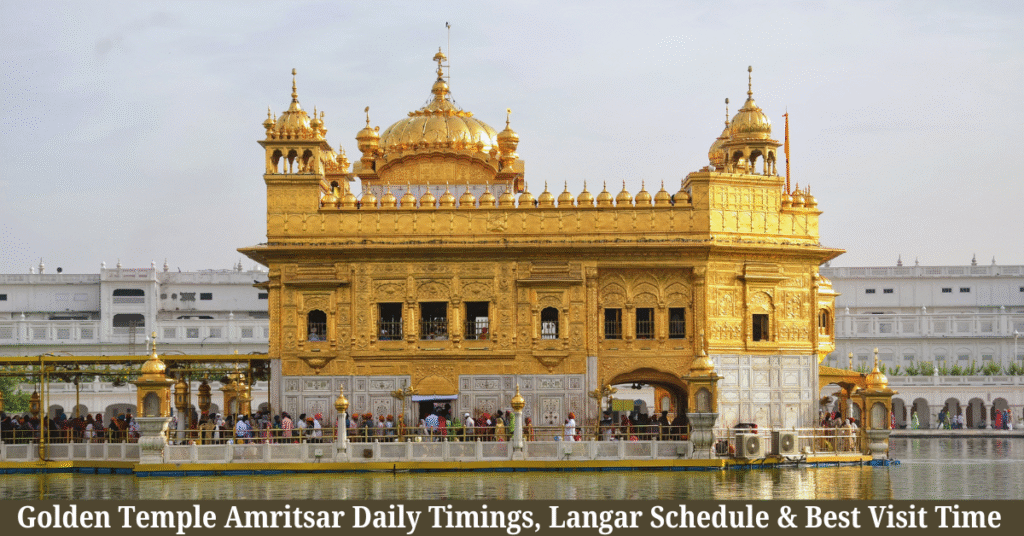
The Golden Temple, also known as Sri Harmandir Sahib or Darbar Sahib, is the spiritual heart of Sikhism and one of the most sacred places in India. Located in the historic city of Amritsar, Punjab, this holy shrine attracts millions of devotees and travelers from across the world every year.
What makes the Golden Temple truly special is its deep message of equality, humility, and selfless service. The temple has four open entrances, welcoming people from all religions, castes, and backgrounds. Here, faith is not divided by identity—everyone walks the same path, bows at the same place, and shares the same meal.
If you are planning a visit, understanding the Golden Temple timings, darshan schedule, and Langar timings can help you plan a peaceful and meaningful experience. This complete guide explains everything you need to know, from daily rituals to the best time to visit, travel tips, and important visitor guidelines.
Golden Temple Timings in Amritsar 2026 (Darshan & Daily Ritual Schedule)
The Golden Temple in Amritsar remains open every day of the year, including Sundays and public holidays. Devotees and visitors can experience darshan almost round the clock, as Sri Harmandir Sahib never truly closes its doors to faith. However, the temple follows a fixed daily ritual schedule, which is helpful to know if you want to witness specific ceremonies.
Darshan generally begins in the early morning hours and continues throughout the day and night, with short ceremonial transitions during the Palki Sahib rituals.
Golden Temple Daily Darshan and Ceremony Timings
| Activity | Approximate Time |
|---|---|
| Opening of temple portals (Kiwad) | Around 2:30 AM |
| Early morning prayers and kirtan | From 2:30 AM |
| First Hukamnama Sahib | Around 5:00 AM |
| Daytime darshan | Morning to evening |
| Evening Rehras Sahib | At sunset |
| Night Hukamnama Sahib | Around 9:45 PM |
| Palki Sahib departs from sanctum | Around 10:00 PM |
| Temple ceremonial closure | Around 10:30 PM |
These timings give visitors a clear idea of how the day unfolds at Sri Harmandir Sahib, especially for those who wish to attend Hukamnama Sahib, kirtan, or the deeply moving Palki Sahib ceremony.
Important Notes About Golden Temple Timings
- The Golden Temple darshan timings may change slightly depending on the season
- During summer and winter, prayer timings may shift by a few minutes
- On major Sikh festivals such as Vaisakhi, Guru Nanak Gurpurab, Diwali, and Bandi Chhor Divas, special arrangements are made
- Festival days attract very large crowds, and waiting time for darshan may be longer
Despite these variations, the spiritual experience remains the same—open, welcoming, and deeply peaceful.
Important Daily Rituals at the Golden Temple, Amritsar
The spiritual life of Sri Harmandir Sahib, popularly known as the Golden Temple, follows a disciplined daily routine rooted in Sikh traditions. Among all the rituals performed each day, two ceremonies hold special importance and define the rhythm of the shrine from dawn to night.
These sacred rituals center around the Guru Granth Sahib, the eternal Guru of Sikhism, and reflect the values of respect, devotion, and humility.
Prakash Ceremony at the Golden Temple
The Prakash ceremony marks the beginning of the day at the Golden Temple and takes place in the early morning hours. During this deeply revered ritual, the Guru Granth Sahib is carried with great honor from the Akal Takht to the sanctum of Sri Harmandir Sahib.
As the procession moves forward, devotees gather in silence, listening to soulful kirtan and prayers. Once the Guru Granth Sahib is placed inside the sanctum, hymns are recited, and a sacred verse is read aloud. This verse becomes the Hukamnama Sahib, offering spiritual guidance for the day to all devotees.
Experiencing the Prakash ceremony is often described as calm, uplifting, and spiritually grounding.
Sukhasan Ceremony at the Golden Temple
The Sukhasan ceremony takes place late at night and marks the conclusion of the day’s darshan at Sri Harmandir Sahib. After the final recitations, prayers, and kirtan, the Guru Granth Sahib is respectfully carried back from the sanctum to the Akal Takht.
This ceremony symbolizes the Guru being placed to rest for the night. The atmosphere during Sukhasan is peaceful and emotional, with soft hymns echoing across the temple complex and the sacred Sarovar reflecting the lights of the shrine.
For many devotees, witnessing the Sukhasan ceremony is a moment of deep reflection and inner peace.
Spiritual Significance of These Daily Ceremonies
Both the Prakash and Sukhasan ceremonies highlight the Sikh belief that the Guru Granth Sahib is not just a holy book, but a living guide. Watching these rituals allows visitors to understand the discipline, reverence, and spiritual depth that define daily life at the Golden Temple.
Whether you attend the early morning Prakash ceremony or the night-time Sukhasan ceremony, the experience leaves a lasting impression and adds profound meaning to your visit.
Golden Temple Langar Timings (Guru ka Langar, Amritsar)
One of the most inspiring and soul-touching experiences at the Golden Temple in Amritsar is Guru ka Langar, the sacred community kitchen that serves free meals to everyone, without any form of discrimination. Whether you are rich or poor, a devotee or a visitor, everyone is welcomed with the same respect and love.
The Golden Temple Langar is widely believed to be the largest free community kitchen in the world, serving thousands of people every single day. It stands as a living example of the Sikh values of seva (selfless service), equality, and sharing.
Golden Temple Langar Timings Throughout the Day
Unlike most places that follow fixed meal hours, Langar at Sri Harmandir Sahib runs almost continuously. Meals are prepared fresh in rotation, ensuring that no one goes hungry at any time of the day.
| Meal Session | Approximate Time |
|---|---|
| Morning Langar | Early morning to late morning |
| Afternoon Langar | Late morning to mid-afternoon |
| Evening Langar | Afternoon to night |
| Late-night Langar | Continues till temple closure |
Because Langar service operates round the clock, visitors can eat before or after darshan, making it convenient for pilgrims at any hour.
What Food Is Served in Golden Temple Langar
The food served in Guru ka Langar is simple, vegetarian, and nourishing, designed to be wholesome and satisfying for everyone.
A typical Langar meal usually includes:
- Roti (chapati)
- Dal
- Seasonal sabzi
- Rice
- Sweet dish on special occasions
All meals are cooked with devotion and served with humility.
Pangat: Eating Together as Equals
Langar is served in rows on the floor, known as Pangat. Everyone sits together—side by side—without distinction of caste, religion, gender, or social status. This tradition powerfully reinforces the Sikh belief that all human beings are equal.
Seva and Discipline in Langar Hall
Thousands of volunteers take part in Langar seva, handling everything from cooking and serving to cleaning utensils and maintaining order. Hygiene is given the highest importance, and the entire process runs with remarkable discipline and coordination.
Visitors are respectfully encouraged to:
- Take only as much food as they can finish
- Avoid wasting food
- Follow instructions given by volunteers
Participating in Langar, whether by eating or by serving, is often described as one of the most humbling and meaningful experiences of a Golden Temple visit.
Best Time to Visit the Golden Temple, Amritsar
The Golden Temple in Amritsar welcomes visitors throughout the year, but choosing the right time can greatly enhance your experience. Each part of the day and season offers a different spiritual and visual atmosphere.
Ideal Time of Day
- Early morning hours are calm, quiet, and perfect for peaceful darshan
- Evenings are especially beautiful as the illuminated shrine reflects in the sacred Amrit Sarovar, creating a serene and unforgettable sight
- Late nights offer a slower pace and a deeply meditative environment
Best Season to Visit
- Winter months from November to March are considered the best time to visit the Golden Temple due to pleasant weather
- Summers can be extremely hot, especially during daytime
- Monsoon months bring humidity but fewer crowds
Visiting During Festivals
- Festivals like Vaisakhi, Diwali, Guru Nanak Gurpurab, and Bandi Chhor Divas bring vibrant celebrations
- These days offer a powerful spiritual experience but attract very large crowds, longer waiting times, and enhanced security arrangements
Golden Temple Entry Fee and Visitor Guidelines
One of the most beautiful aspects of Sri Harmandir Sahib is that there is no entry fee. Darshan and Guru ka Langar are completely free for everyone, reflecting the Sikh principles of equality and service.
Important Visitor Guidelines
To maintain the sanctity and discipline of the Golden Temple complex, visitors are required to follow certain rules:
- Keep your head covered at all times inside the complex
- Remove footwear and wash feet before entering
- Wear modest and respectful clothing
- Strictly avoid tobacco, alcohol, and intoxicants
- Maintain silence and show respect during prayers and rituals
Photography and Sarovar Rules
- Photography is allowed only in outer areas of the complex
- Taking photos inside the sanctum is not permitted
- Swimming, bathing with soap, or using detergents in the holy Sarovar is strictly prohibited
Following these guidelines ensures a respectful environment and allows everyone to experience the Golden Temple in its true spiritual form.
How to Reach the Golden Temple, Amritsar
The Golden Temple in Amritsar is located near the city center and is easily accessible from all parts of the city as well as from major towns across North India. Whether you are traveling by air, train, or road, reaching Sri Harmandir Sahib is convenient and well-organized.
By Air
The Sri Guru Ram Das Ji International Airport is located about 13 kilometers from the Golden Temple. From the airport, taxis and app-based cabs are readily available and take around 30 minutes to reach the temple, depending on traffic.
By Train
Amritsar Junction Railway Station is approximately 2 kilometers from the Golden Temple. The short distance makes it easy to reach the shrine by auto-rickshaw, taxi, or even on foot for those who prefer a walk through the old city lanes.
By Road
Amritsar is well connected by road to major cities such as Delhi, Chandigarh, Jammu, and Pathankot. Regular government and private buses, along with taxis, operate throughout the day, making road travel a popular option for pilgrims.
Local Transport Options
Within the city, visitors can use:
- Auto-rickshaws
- Cycle rickshaws
- City buses
- Free shuttle buses operated by the temple trust
These services make reaching the Golden Temple simple, affordable, and stress-free.
Places to Visit Near the Golden Temple
Several major tourist attractions are located close to the Golden Temple, allowing visitors to plan a full and meaningful day in Amritsar.
- Jallianwala Bagh – A historic memorial dedicated to the victims of the 1919 massacre
- Durgiana Temple – A revered Hindu temple with architecture similar to the Golden Temple
- Wagah Border – Famous for the daily retreat ceremony at the India–Pakistan border
- Maharaja Ranjit Singh Museum – Showcasing the life and legacy of the Sikh Empire’s founder
- Ram Bagh Gardens – A peaceful historical garden once associated with Maharaja Ranjit Singh
Most of these places are within a short distance and can be covered in a single day.
Facilities Available Inside the Golden Temple Complex
The Golden Temple complex is thoughtfully designed to accommodate large numbers of visitors while maintaining cleanliness and order.
Facilities available for pilgrims include:
- Free shoe storage counters
- Clean drinking water facilities
- Well-maintained washrooms and bathing areas
- Free medical dispensary for basic healthcare needs
- Donation counters that provide proper receipts
- A tourist information office to assist visitors
These facilities ensure that devotees and travelers can focus entirely on their spiritual experience without discomfort or inconvenience.
Daily Religious Schedule of Golden Temple (Month-Wise Timings)
The daily routine of Sri Harmandir Sahib follows the Nanakshahi (Sikh) calendar, which means the prayer and darshan timings change slightly every month according to sunrise and sunset. This tradition has been followed for centuries to maintain the sanctity of Sikh rituals.
Because of this, the Golden Temple opening time, Hukamnama time, and closing ceremony vary throughout the year. Understanding this schedule helps devotees plan their visit more meaningfully, especially those wishing to attend Amrit Vela or evening prayers.
Sikh Calendar Months Followed at Golden Temple
The Golden Temple timings are organized according to Sikh calendar months such as Chet, Vaisakh, Jeth, Harh, Sawan, Bhadon, Assu, Kattak, Maggar, Poh, Magh, and Phaggan. Each month roughly spans mid-month to mid-month in the regular calendar, ensuring rituals align with natural daylight.
Important Daily Ceremonies at Sri Harmandir Sahib
The day at the Golden Temple begins before dawn and continues until late night with a well-defined spiritual routine.
A brief overview of the main daily rituals followed at Harmandir Sahib:
| Ceremony | Spiritual Significance |
|---|---|
| Opening of Kiwad (Doors) | Marks the opening of the Golden Temple for devotees |
| Amrit Vela Kirtan | Early morning devotional singing |
| Asa di Var | Sacred morning prayer |
| Palki Sahib Procession | Guru Granth Sahib is ceremonially brought to the sanctum |
| First Hukamnama | First divine command of the day |
| Evening Rehras Sahib | Sunset prayer |
| Night Hukamnama | Final message of the day |
| Sukh Aasan Sahib | Closing ceremony of the Golden Temple |
These rituals ensure that darshan, kirtan, and prayers continue in a disciplined and spiritual atmosphere throughout the day.
Why Golden Temple Timings Change Every Month
Unlike ordinary temples with fixed timings, Golden Temple darshan timings change slightly every month. This is done to align prayers with natural daylight hours, especially for Amrit Vela and evening Rehras Sahib.
Visitors should note that:
- Morning opening time may shift by a few minutes each month
- Evening prayers depend on sunset timing
- The temple closes only after the Sukh Aasan Sahib ceremony
Despite these variations, Guru Ka Langar remains open all day and night, ensuring no devotee goes hungry.
FAQs About Golden Temple Amritsar Timings & Visit
Q. What are the Golden Temple Amritsar opening hours?
A. The Golden Temple is open 24 hours daily, with monthly-adjusted timings for prayers and ceremonies.
Q. When is Amrit Vela at Golden Temple?
A. Amrit Vela, the early morning prayer, starts between 2:00 am and 2:45 am depending on the month.
Q. What time is the first Hukamnama at Golden Temple?
A. The first Hukamnama is read in the morning between 4:30 am and 5:30 am, varying with the Sikh calendar.
Q. Are there any entry fees for Golden Temple?
A. No, entry to the Golden Temple is free for everyone.
Q. What are the Golden Temple langar timings?
A. Guru Ka Langar runs all day and night, serving free vegetarian meals to every visitor.
Q. What is Sukh-Aasan Sahib at Golden Temple?
A. It is the night closing ritual when Guru Granth Sahib is carried to Akal Takht and the temple closes.
Q. When is the best time to visit Golden Temple?
A. Winter months (November–March) are ideal, and visiting during festivals like Vaisakhi, Diwali, or Gurpurabs is highly recommended.
Q. What should I keep in mind when visiting Golden Temple?
A. Cover your head, wash your feet, walk clockwise, avoid intoxicants, and photography is allowed only in certain areas.
Q. How can I reach Golden Temple, Amritsar?
A. It is accessible by air (13 km from airport), train (2 km from Amritsar Junction), road, taxis, and free temple buses.
Q. What is the daily schedule at Golden Temple?
A. Daily rituals include opening of doors, Kirtan at Amrit Vela, Asa di Var, Hukamnama readings, Rehras Sahib in evening, and Sukh-Aasan at night.