Maha Shivaratri is one of the most spiritually powerful festivals in Hinduism, devoted to Lord Shiva and Goddess Parvati, the divine mother. Observed with fasting, prayer, meditation, and night-long worship, this sacred occasion holds deep meaning for devotees seeking peace, balance, and spiritual growth. Unlike most festivals celebrated during the day, Maha Shivaratri is primarily observed at night, symbolizing the victory of awareness over darkness and ignorance.
This complete guide to Maha Shivaratri 2026 and 2027 explains the correct dates, spiritual significance, fasting rules, puja method, food guidelines, and how the festival is celebrated across India, making it fully blog-ready and optimized for search visibility.
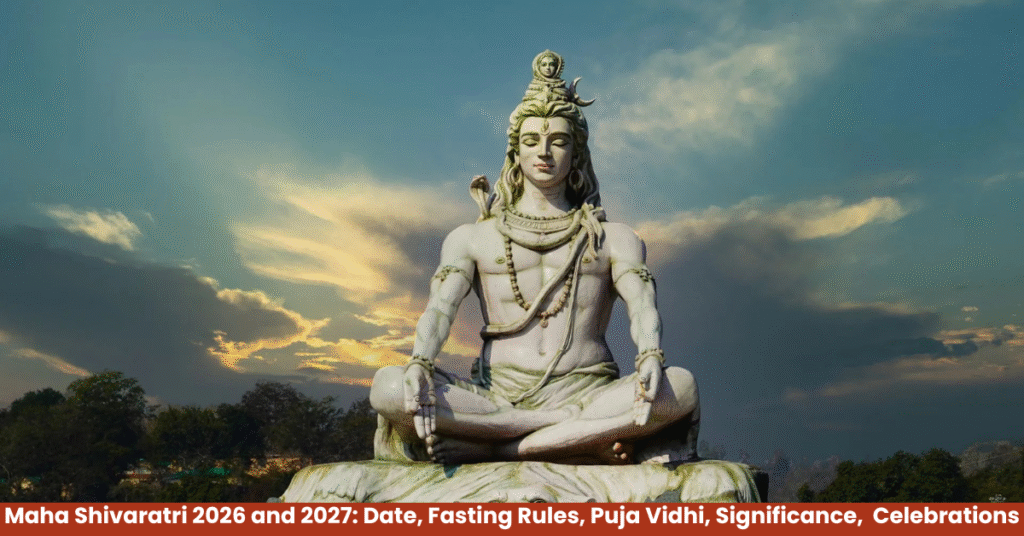
Maha Shivaratri 2026 and 2027 Date and Day
Maha Shivaratri is observed on Krishna Paksha Chaturdashi in the Hindu month of Phalguna. Since it follows the lunar calendar, the date changes every year.
In 2026, Maha Shivaratri will be observed on Sunday, 15 February 2026.
In 2027, the festival will fall on Saturday, 6 March 2027.
| Year | Date | Day | Festival |
|---|---|---|---|
| 2026 | 15 February | Sunday | Maha Shivaratri |
| 2027 | 6 March | Saturday | Maha Shivaratri |
Maha Shivaratri is observed across India, though it is not an official public holiday in a few states and union territories. Devotees usually perform the main Shiva Puja during Nishita Kaal, the midnight period considered most auspicious for worship.
Meaning and Spiritual Significance of Maha Shivaratri
The word Maha Shivaratri literally means “The Great Night of Lord Shiva.” This sacred Hindu festival holds immense spiritual importance and is associated with powerful divine events described in ancient scriptures.
According to one widely followed belief, Maha Shivaratri marks the divine marriage of Lord Shiva and Goddess Parvati, symbolizing the union of consciousness and energy. Another belief links this night to Lord Shiva’s cosmic Tandava dance, which represents the eternal cycle of creation, preservation, and transformation of the universe.
From a spiritual perspective, Maha Shivaratri is considered an ideal time for inner awakening and self-realization. Devotees observe fasting and remain awake throughout the night to develop awareness, discipline, and control over negative thoughts. The night is especially favorable for meditation, self-reflection, mantra chanting, and spiritual renewal, as divine energies are believed to be highly active.
Why Fasting Is Observed on Maha Shivaratri
Fasting on Maha Shivaratri is not just a ritual but a spiritual practice aimed at purifying the body and calming the mind. By limiting or avoiding food, devotees try to reduce physical distractions and focus completely on prayers and devotion to Lord Shiva.
There is no single compulsory fasting rule for Maha Shivaratri. People follow fasting practices according to their health, age, and personal belief. The true essence of fasting lies in sincerity and devotion, not strict rules.
Common Types of Maha Shivaratri Fast
| Fasting Type | What It Means |
|---|---|
| Nirjala Fast | No food or water throughout the day and night |
| Phalahar Fast | Fruits, milk, and water only |
| Milk Fast | Only milk and water |
| Single-Meal Fast | One light satvik meal after evening prayers |
Traditionally, the fast is completed the next morning after offering prayers to Lord Shiva and performing Abhishekam.
Foods Allowed and Avoided During Shivaratri Fast
Food consumed during Shivaratri vrat is strictly satvik, light, and easy to digest. Such food helps maintain physical energy without disturbing mental peace or spiritual focus.
Allowed and Avoided Foods on Maha Shivaratri
| Allowed Foods | Reason | Avoided Foods |
|---|---|---|
| Fruits, bananas | Easy to digest | Rice, wheat, grains |
| Milk, curd, paneer | Pure and nourishing | Onion, garlic |
| Sabudana, potatoes | Traditional vrat food | Non-vegetarian food |
| Makhana, nuts | Good energy and protein | Alcohol, tobacco |
| Pumpkin, bottle gourd | Light vegetables | Spicy and oily food |
Children, elderly people, pregnant women, and those with medical conditions are advised to follow fasting according to their physical capacity or avoid it altogether.ons are advised to follow mild fasting or avoid fasting if needed.
Maha Shivaratri Puja Vidhi at Home
Performing Shiva Puja at home on Maha Shivaratri is simple and spiritually meaningful. Devotees usually wake up early, take a bath, clean the prayer area, and prepare offerings with devotion.
The central ritual is Abhishekam, where water, milk, or other sacred items are poured over the Shiva Lingam while chanting mantras such as Om Namah Shivaya. Offering Bel Patra is considered especially auspicious and dear to Lord Shiva.
| Puja Item | Spiritual Meaning |
|---|---|
| Water and milk | Purity and devotion |
| Bel Patra | Sacred offering to Shiva |
| Honey and curd | Balance and harmony |
| Dhoop and diya | Positive energy |
| Bhasma | Detachment from ego |
| Rudraksha | Spiritual protection |
Even a brief prayer performed with faith is believed to be spiritually rewarding.
Night Worship and Jaagran on Maha Shivaratri
Staying awake throughout the night, known as jaagran, is a key part of Maha Shivaratri observance. It represents alertness, self-control, and spiritual focus.
Many devotees perform four prahar pujas during the night. Temples organize bhajans, kirtans, Shiva Purana recitations, and meditation sessions that continue until early morning.
Powerful Shiva Mantras to Chant on Maha Shivaratri
Chanting sacred Shiva mantras on Maha Shivaratri is believed to cleanse negative energies, calm the mind, and bring spiritual awakening. This holy night is considered extremely powerful for meditation and mantra sadhana, as divine energies are said to be at their peak.
Some of the most widely chanted and spiritually significant Lord Shiva mantras include:
- Om Namah Shivaya – The most powerful and universal mantra of Lord Shiva, symbolizing surrender and inner peace.
- Maha Mrityunjaya Mantra – Chanted for protection, good health, and liberation from fear and negativity.
- Shiva Panchakshara Stotra – A devotional hymn praising the five sacred syllables of Shiva.
- Rudra Gayatri Mantra – Invoked for wisdom, strength, and spiritual growth.
Devotees often chant these mantras using a rudraksha mala, as it is believed to enhance concentration, maintain rhythm, and deepen the spiritual experience during night-long worship.
How Maha Shivaratri Is Celebrated Across India
Maha Shivaratri celebrations in India reflect the country’s rich cultural diversity, with each region observing the festival in its own unique way while sharing the same devotion to Lord Shiva.
- North India: Devotees throng major Shiva temples and take part in night-long bhajans, kirtans, and meditation sessions.
- South India: Grand Abhishekam rituals are performed using milk, water, honey, curd, and sacred ash, accompanied by Vedic chants.
- West Bengal and Odisha: Many devotees observe strict fasting and visit prominent Jyotirlinga temples for special darshan and prayers.
Holy cities like Varanasi, Ujjain, Kedarnath, and Somnath witness massive gatherings of devotees, creating a deeply spiritual atmosphere throughout the night of Maha Shivaratri.
Importance of Maha Shivaratri in Modern Life
In today’s fast-paced world, Maha Shivaratri offers a chance to slow down and reconnect with inner calm. Many people observe the day as a time for mental cleansing, stress relief, and emotional balance.
Urban temples and spiritual groups now organize community pujas, meditation sessions, and live-streamed rituals, allowing wider participation.
Simple Practices for a Meaningful Shivaratri
Devotees try to maintain purity in thoughts, speech, and actions on this sacred day. Calm behavior, simple food, and kindness are encouraged, while alcohol, non-vegetarian food, and harsh speech are avoided.
Acts of compassion such as donating food, helping the needy, or feeding animals are believed to bring special spiritual blessings on Maha Shivaratri.
Do’s and Don’ts on Maha Shivaratri
Following the right practices on Maha Shivaratri helps devotees gain maximum spiritual benefits from this sacred occasion.onduct elaborate Abhishekam and spiritual programs. In Himalayan regions, devotees visit sacred shrines despite harsh weather, reflecting deep devotion.
Do’s:
- Maintain purity in thoughts, words, and actions
- Observe fasting as per one’s capacity
- Chant Shiva mantras and spend time in meditation
- Stay calm, disciplined, and focused throughout the day and night
Don’ts:
- Avoid alcohol, tobacco, and non-vegetarian food
- Refrain from negative speech, anger, and harmful thoughts
- Do not engage in excessive sleep during the night vigil
A peaceful mindset, devotion, and self-control are considered just as important as rituals and offerings on Maha Shivaratri.
Maha Shivaratri 2026 and 2027: A Night of Inner Transformation
Maha Shivaratri in 2026 and 2027 is more than a religious observance. It is a sacred reminder to pause, reflect, and rise above negativity. Whether through fasting, chanting, meditation, or a simple offering of water to the Shiva Lingam, devotion expressed with sincerity is believed to reach Lord Shiva.
This great night teaches discipline, balance, and compassion, guiding devotees toward a calmer mind and a more meaningful life.
Maha Shivaratri FAQs
Q. When is Maha Shivaratri in 2026?
Maha Shivaratri will be observed on Sunday, 15 February 2026.
Q. What is the date of Maha Shivaratri 2027?
Maha Shivaratri 2027 will fall on Saturday, 6 March 2027.
Q. Why is Maha Shivaratri celebrated?
It marks the Great Night of Lord Shiva, symbolizing spiritual awakening and the victory over ignorance.
Q. Is Maha Shivaratri celebrated during the day or night?
Maha Shivaratri is mainly observed at night, with prayers and jaagran until morning.
Q. What is the best time to do Shiv Puja on Maha Shivaratri?
The most auspicious time is Nishita Kaal, around midnight.
Q. Is fasting compulsory on Maha Shivaratri?
No, fasting is optional. Devotion and sincerity matter more than strict fasting.
Q. What food is allowed during Shivaratri fast?
Fruits, milk, sabudana, makhana, and light vrat foods are commonly allowed.
Q. Which mantra is best for Maha Shivaratri?
“Om Namah Shivaya” is the most widely chanted and powerful mantra.
Q. Can Maha Shivaratri puja be done at home?
Yes, Shiva Puja can be done at home with simple offerings and prayers.
Q. Which temples are most famous for Maha Shivaratri?
Kashi Vishwanath, Somnath, Mahakaleshwar, Kedarnath, and Mallikarjuna are most popular.