Govardhan Parikrama is one of the most sacred and emotionally moving pilgrimages in India. Performed around Govardhan Parvat in Mathura district, Uttar Pradesh, this holy walk is deeply connected with Lord Krishna and the divine land of Braj. For millions of devotees, Govardhan is not merely a hill; it is Giriraj Maharaj himself, worshipped as a living and compassionate form of Shri Krishna.
Every day, thousands of devotees undertake Govardhan Parikrama barefoot, with folded hands, chanting Krishna’s name and offering prayers at every step. The devotion multiplies during auspicious occasions such as Govardhan Puja, Guru Purnima, Kartik Purnima, Amavasya, and Ekadashi, when the entire parikrama route transforms into a flowing ocean of faith, devotion, and surrender.
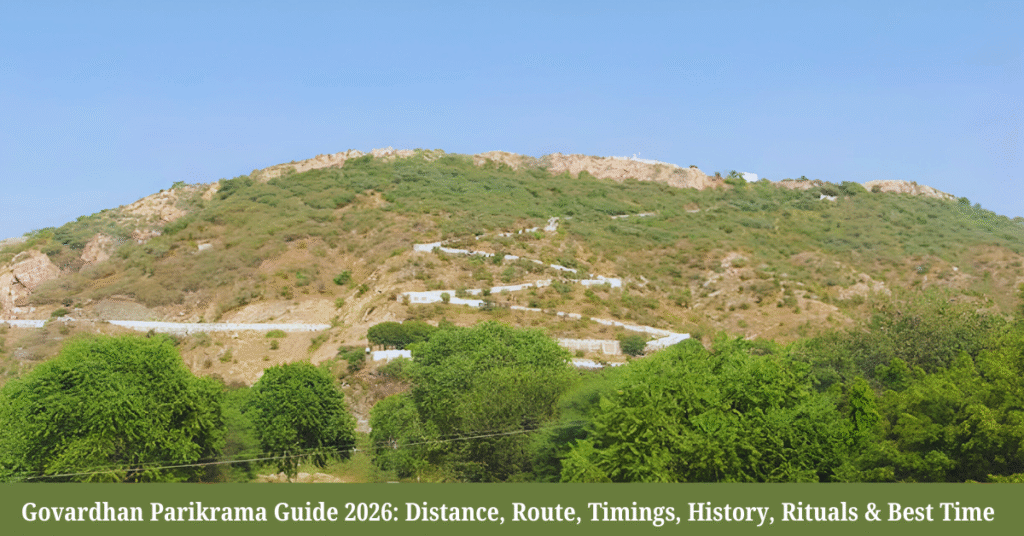
Govardhan Parikrama is not only a physical journey of about 21 kilometers, but also a deeply spiritual experience believed to remove sins, fulfill wishes, and bring inner peace. Devotees believe that completing Giriraj Parikrama with a pure heart grants the blessings of Shri Krishna, Radha Rani, and Giriraj Maharaj.
In this complete Govardhan Parikrama guide, you will find everything a devotee needs to know — including the history and spiritual significance, parikrama route and distance, best time and timings, important rules to follow, and practical tips for first-time pilgrims. This guide is written in a simple, easy-to-understand way to help you plan your parikrama smoothly and experience the true spiritual essence of Govardhan.
Why Govardhan Parikrama Is Spiritually So Powerful
Govardhan Parikrama is not considered an ordinary religious walk. It is a deep act of surrender, devotion, and spiritual connection. In Vaishnav tradition, walking around Govardhan Parvat is believed to be the same as circumambulating Lord Krishna himself, making this parikrama one of the most spiritually rewarding practices in Braj Bhoomi.
According to sacred belief, Giriraj Govardhan is a living divine form of Shri Krishna. Every step taken around the hill is seen as an offering of faith, humility, and complete surrender to the Supreme Lord.
The spiritual power of Govardhan Parikrama comes from the divine incident described in ancient scriptures, where Lord Krishna lifted Govardhan Hill on his little finger to protect the people of Braj from the wrath of Lord Indra’s torrential rains. This act established Govardhan as Giriraj Maharaj – the eternal protector, shelter-giver, and provider of devotees. Since then, worshipping Govardhan Parvat has become an essential part of Krishna devotion.
Spiritual Benefits of Govardhan Parikrama
Devotees firmly believe that performing Govardhan Parikrama with pure devotion brings powerful spiritual and emotional transformation. The sacred walk is said to:
- Help remove negative karma and deep-rooted fears
- Bring inner peace, emotional stability, and mental clarity
- Support spiritual growth and self-realization
- Fulfill sincere wishes when performed with faith and discipline
- Strengthen humility, patience, and surrender toward Lord Krishna
Many devotees describe Govardhan Parikrama as a journey of the soul, where physical effort turns into spiritual bliss. The chanting of Krishna’s name, the sacred dust of Braj, and the divine presence of Giriraj Maharaj together create an atmosphere of unmatched spiritual energy.
Because of this deep spiritual power, Govardhan Parikrama is considered especially auspicious during Govardhan Puja, Kartik month, Amavasya, Ekadashi, and full moon days, though devotees perform it throughout the year with equal devotion.
Govardhan Parikrama Distance – Complete Guide with Timings and Variations
Govardhan Parikrama, the sacred circumambulation of Govardhan Hill in Mathura, Uttar Pradesh, is a deeply spiritual journey. Understanding the distance, route, and time required is essential for first-time pilgrims and regular devotees alike.
Total Govardhan Parikrama Distance
The holy walk of Govardhan is traditionally divided into two parts, together forming the complete parikrama:
| Parikrama Type | Distance |
|---|---|
| Badi Parikrama | 12 km |
| Chhoti Parikrama | 9 km |
| Total Parikrama | 21 km |
- Badi Parikrama (12 km): Considered the major or full parikrama, covering the entire circumference with all major temples, kunds, and sacred spots.
- Chhoti Parikrama (9 km): A shorter route, often chosen by devotees with time constraints, health considerations, or personal vows.
Most pilgrims complete the full 21 km parikrama in a single day, while others prefer to undertake only the Chhoti Parikrama, depending on their stamina and schedule.
How Much Time Does Govardhan Parikrama Take?
On average, Govardhan Parikrama takes 5 to 6 hours if done continuously without extended stops. However, most devotees spend more time along the route, pausing at temples, sacred kunds, and other holy spots to offer prayers.
Key Factors Affecting Parikrama Time:
- Crowd Density: During festivals like Govardhan Puja, Kartik Purnima, and Guru Purnima, larger crowds can slow the pace.
- Weather Conditions: Summer heat or monsoon rains can extend walking time.
- Age and Walking Speed: Elderly devotees or beginners may require additional breaks.
- Number of Darshan Stops: Visiting temples or performing rituals at sacred spots adds extra time.
For devotees performing Dandavat Parikrama—a full-body prostration at every step—the journey can take several days or even weeks, depending on physical endurance and devotion. This traditional practice is considered highly meritorious and deeply spiritual, symbolizing complete surrender to Giriraj Maharaj.
✅ Pro Tip for Pilgrims: Start early in the morning to avoid peak crowd hours and to complete the parikrama comfortably with time for darshan at major temples like Radha Kund, Shyam Kund, and Mansi Ganga.
Govardhan Parikrama Route – Complete Guide to Sacred Places and Spiritual Stops
Govardhan Parikrama is a holy circumambulation around Govardhan Parvat in Mathura, Uttar Pradesh, offering devotees a profound spiritual journey. The parikrama route is carefully planned, connecting villages, sacred kunds, and ancient temples, each reflecting the divine pastimes of Lord Krishna and Giriraj Maharaj.
Starting Point of Govardhan Parikrama
Most devotees begin and end their parikrama at Daan Ghati Mandir, following a clockwise direction, which is considered auspicious. Govardhan village lies at the center of the parikrama path, with Radha Kund to the north and Puchhari & Jatipura to the south, forming a complete spiritual circuit.
Badi Govardhan Parikrama Route (Outer, Longer Route)
The Badi Parikrama is the longer and outer route, covering approximately 12 km and including many sacred stops:
1. Daan Ghati Mandir
- The traditional starting point of parikrama.
- Associated with Krishna’s playful leela of collecting butter and curd as daan (offering) from the Gopis.
- Symbolizes loving surrender and devotion to Krishna.
2. Sankarshan Kund
- Located near the ancient Dauji Temple.
- Linked with Lord Balaram (Sankarshan).
- A site of deep spiritual significance for devotees of Krishna-Balaram.
3. Poonchhri Ka Lautha
- Small yet extremely important stop.
- Believed to be the residence of Krishna’s dear friend, Poonchhri.
- Parikrama is considered incomplete without visiting this sacred spot.
4. Shri Nath Ji Temple
- Located on Govardhan Hill.
- Reflects the divine love of Radha and Krishna.
- Offers a highly spiritual atmosphere for meditation and prayer.
5. Indraman Bhang
- The legendary site where Lord Indra’s pride was humbled by Krishna.
- Footprints of Indra’s elephant Airavat are still visible here, attracting devotees.
6. Jatipura Temple
- One of the major stops along the parikrama.
- Devotees offer Chhappan Bhog here.
- The Mukharvind (mouth view) of Giriraj Maharaj can be glimpsed from this sacred temple.
Chhoti Govardhan Parikrama Route (Inner, Sacred Route)
The Chhoti Parikrama, approximately 9 km, begins after Jatipura Mukharvind and focuses on the most spiritually potent kunds and temples:
1. Lakshmi Narayan Mandir
- Starting point for many parikrama rituals.
- Symbolizes prosperity, balance, and fulfillment of vows.
2. Uddhav Kund
- Associated with Uddhav ji, Krishna’s trusted friend.
- Represents humility, devotion, and spiritual learning.
- Mentioned in several Puranic texts.
3. Radha Kund
- Among the holiest spots in Braj.
- Directly connected with Radha Rani and Krishna’s divine pastimes.
- Known for its immense spiritual power and sanctity.
4. Shyam Kund
- Located near Radha Kund.
- Linked to Krishna’s purification leela after slaying Arishtasura.
5. Kusum Sarovar
- Renowned for its breathtaking natural beauty.
- Associated with Radha Rani collecting flowers for Krishna.
- Offers a calm and meditative environment, deeply touching the heart.
6. Kaan Wale Baba
- Unique temple where devotees whisper their wishes into the stone ear of Giriraj Maharaj.
- Believed that their prayers are directly heard by the Lord.
7. Mansi Ganga
- Considered the spiritual heart of Govardhan.
- Mother Ganga is believed to have appeared here by Krishna’s will during Kartik Amavasya.
- A deeply revered and spiritually powerful site for all pilgrims.
✅ Pro Tip for Pilgrims: Completing both Badi and Chhoti Parikrama in one day allows devotees to experience all major sacred spots and kunds, maximizing spiritual blessings and devotion.
Govardhan Parikrama Timings, Best Season, Rules & Practical Tips
Govardhan Parikrama is a sacred pilgrimage around Govardhan Hill in Mathura, Uttar Pradesh, and timing, discipline, and preparation play a key role in maximizing spiritual benefits. This guide covers the best time to do Parikrama, essential rules, and practical tips for devotees.
Best Time and Timings for Govardhan Parikrama
While Govardhan Parikrama can be performed throughout the year, choosing the right time ensures comfort, safety, and devotion:
- Early Morning (4 AM – 6 AM): The most auspicious time, offering a serene and peaceful environment.
- Winter Months (October – March): Ideal for daytime Parikrama due to cool weather.
- Summer Months: Many devotees prefer night Parikrama to avoid heat and fatigue.
- Kartik Month: Considered the most spiritually rewarding period for Parikrama.
- During Festivals: Days like Govardhan Puja, Guru Purnima, and Kartik Purnima attract heavy crowds, so starting early is highly recommended.
Performing Parikrama at the right time allows devotees to experience the maximum spiritual energy of Giriraj Maharaj and Braj Bhoomi.
Important Rules to Follow During Govardhan Parikrama
To maintain the sanctity and spiritual discipline of the pilgrimage, devotees traditionally follow these rules:
- Start and end Parikrama at the same place – usually Daan Ghati Mandir.
- Bathing at Mansi Ganga before starting is considered highly auspicious.
- Never leave Parikrama incomplete; finishing the sacred circumambulation is essential.
- Do not step directly on the stones of Govardhan; they are sacred.
- Maintain cleanliness and respect nature along the entire path.
These practices reflect devotion, discipline, and respect for Giriraj Maharaj, ensuring a spiritually fulfilling experience.
Practical Tips for a Smooth and Safe Govardhan Parikrama
While devotion is the heart of Parikrama, some practical considerations make the journey more comfortable:
- Walk barefoot only if physically able; use footwear if needed to prevent injuries.
- Carry water and basic medicines for hydration and minor health needs.
- Be cautious of monkeys around food and belongings.
- Keep valuables secure to avoid loss or theft.
- Take your time and enjoy the spiritual atmosphere – Govardhan Parikrama is not a race; every step is meant to be felt with devotion and awareness.
Remember, the essence of Govardhan Parikrama is devotion, surrender, and inner connection with Krishna, not speed or completion time. Walking mindfully allows you to absorb the divine energy of Giriraj Maharaj fully.
Rituals and Traditions During Govardhan Parikrama
The 21 km Govardhan Parikrama is a deeply spiritual journey performed with devotion, love, and surrender. The key rituals observed by devotees include:
- Walking Barefoot: Most devotees walk barefoot as a sign of humility and devotion to Giriraj Maharaj. Barefoot walking is believed to purify the soul and enhance the spiritual experience.
- Chanting Lord Krishna’s Names: Pilgrims continuously chant “Radhe Radhe,” “Jai Giriraj Maharaj,” and the Hare Krishna Mahamantra, creating sacred vibrations and keeping the mind focused on devotion throughout the journey.
- Govardhan Parikrama Pradakshina (Circumambulation): The parikrama is performed in a clockwise direction, starting from traditional points like Daan Ghati Mandir or Jatipura, passing through spiritually important stops such as Mansi Ganga, Kusum Sarovar, Radha Kund, and Shyam Kund.
- Dandavat Parikrama (Advanced Devotion): Highly devoted pilgrims perform Dandavat Parikrama, lying flat on the ground, marking the spot with their hands, and repeating the process for the full 21 km. This rare act demonstrates total surrender to Krishna and may take days or weeks to complete.
- Offering Milk, Tulsi, and Prayers: Devotees carry milk, water, flowers, and Tulsi leaves to present at sacred sites and at the Mukharvind (lotus feet) of Giriraj Maharaj, expressing gratitude and seeking blessings.
- Lighting Diyas/Lamps: Many pilgrims light lamps or diyas, particularly on Purnima (full moon) and Govardhan Puja, symbolizing spiritual illumination, devotion, and Krishna’s divine presence.
- Vrat (Fasting): Devotees often observe Vrat or fasting, consuming simple satvik food, and some choose to partake in prasad only after completing the entire Parikrama. This practice enhances spiritual merit and discipline.
✅ Pro Tip: Combining barefoot walking, chanting, offerings, lamp lighting, and fasting transforms Govardhan Parikrama into a complete spiritual journey, allowing every step to be felt as a sacred connection with Lord Krishna and Giriraj Maharaj.
History of Govardhan Parikrama
The tradition of Govardhan Parikrama dates back to Dwapar Yuga, during the time of Lord Krishna. The most celebrated story associated with Govardhan is Krishna lifting the hill to protect the people of Braj. When Lord Indra, the god of rain, became arrogant and demanded worship, Krishna advised the villagers to worship Govardhan Hill, which provided them with food, water, and shelter.
Enraged by this, Indra unleashed heavy rains to flood Braj, but Krishna lifted Govardhan Hill on his little finger for seven days and nights, safeguarding the villagers and their cattle. Since then, Govardhan has been revered as Giriraj Maharaj, and the practice of circumambulating the hill began as a way to honor Krishna’s divine leela and the sacred hill itself. Walking around Govardhan is not just a physical act but a spiritual tradition that connects devotees directly with the divine energy of Krishna and the sanctity of Braj Bhoomi.
Govardhan Parikrama Map
The Govardhan Parikrama Map follows a clockwise circuit around Govardhan Hill in the Mathura district of Uttar Pradesh. Starting from the traditional point at Daan Ghati Mandir, the route circles the hill in a loop visiting major sacred spots, kunds, and temples before returning to the same starting point.
Govardhan Parikrama FAQs
Q1: What is Govardhan Parikrama?
A1: Govardhan Parikrama is a sacred pilgrimage around Govardhan Hill in Mathura, worshipped as Giriraj Maharaj, believed to be a form of Lord Krishna.
Q2: How long is Govardhan Parikrama?
A2: The full Parikrama is 21 km, combining Badi Parikrama (12 km) and Chhoti Parikrama (9 km).
Q3: How much time does it take to complete?
A3: It usually takes 5 to 6 hours, depending on stops at temples and kunds along the route.
Q4: When is the best time to do Govardhan Parikrama?
A4: October to March is ideal for daytime Parikrama. Nighttime Parikrama is preferred in summer. Kartik month is considered the most auspicious.
Q5: Where does Govardhan Parikrama start and end?
A5: Most devotees start and end at Daan Ghati Mandir, walking clockwise around Govardhan Hill.
Q6: What are the main stops during the Parikrama?
A6: Key spots include Daan Ghati Mandir, Sankarshan Kund, Poonchhri Ka Lautha, Shri Nath Ji Temple, Jatipura Temple, Radha Kund, Shyam Kund, Kusum Sarovar, Kaan Wale Baba, and Mansi Ganga.
Q7: What rituals should be followed during Parikrama?
A7: Walk barefoot, chant Krishna mantras, offer prayers at temples, bathe at Mansi Ganga before starting, and complete the Parikrama without shortcuts.
Q8: What is Dandavat Parikrama?
A8: Dandavat Parikrama is a devotional practice where devotees perform full-body prostration at each step, taking several days or weeks.
Q9: How to reach Govardhan for Parikrama?
A9: Govardhan is 22 km from Mathura. Visitors can reach by train, bus, taxi, or auto. Nearest airports are Agra and Delhi.
Q10: Are there facilities along the Parikrama route?
A10: Yes, there are drinking water points, rest areas, dharamshalas, food stalls, and medical aid, especially during festivals.